













Teknic homepage

Increasing Semiconductor Test Throughput with Active Vibration Suppression

No person or company received any form of compensation for their feedback on Teknic products.

Texas Instruments (TI) is a pioneer in the semiconductor industry, notably for its Digital Light Processing (DLP®) technology. At the heart of this technology are Digital Micromirror Devices (DMDs), highly complex MEMS chips containing millions of microscopic mirrors used in cinema projection, automotive displays, and advanced light control applications.

Testing these devices requires a sophisticated mix of optical, electrical, and mechanical validation. John Decker, a Mechanical Design Engineer with over 40 years of experience at TI, works on the automated test systems responsible for this critical quality control. These machines utilize a robotic arm to load, unload, and sort devices, while a separate optical station handles the "Device Under Test" (DUT).

The Vibration Challenge

As TI developed higher-density DMDs with smaller mirrors, the optical test instrumentation became increasingly sensitive. The engineering team discovered that the mechanical vibration generated by the part-handling robot, specifically the shoulder and elbow axes, was interfering with the optical tester.

"We have some optics more sensitive to the robot's move," explains John. "That movement can actually cause vibration throughout the machine."

This created a production bottleneck. If the robot moved while a test was in progress, the resulting vibrations caused false failures. To ensure accuracy, the robot had to stop completely during the test cycle, significantly reducing machine throughput.

"This lets the robot part handling system keep running while tests are starting or being executed without that robot vibration affecting the tests."
John Decker
John Decker
Mechanical Design Engineer, Texas Instruments

Asynchronous Operation with g-Stop™

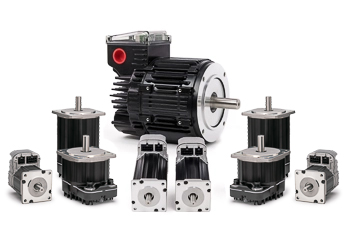
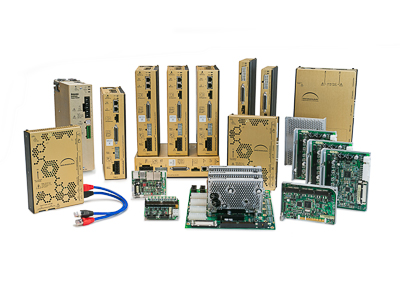
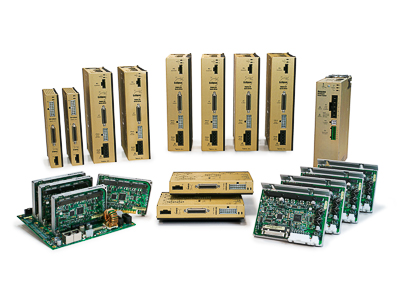
To solve this, TI upgraded the motion control architecture to Teknic’s Meridian integrated servo controllers, utilizing the proprietary g-Stop™ vibration suppression technology. This feature allows the motion system to move high-inertial loads quickly without exciting the mechanical resonances that caused the vibration.

"We were able to use g-Stop™ to greatly reduce that [vibration]," says John.

By eliminating the source of the mechanical vibration from the motion command, TI restored the ability to run the machine processes asynchronously to increase throughput. The robot can now aggressively sort and load parts without disturbing the delicate measurements occurring nearby.

Enhancing Safety and Footprint

Beyond performance, the Meridian’s integrated design streamlined the machine's physical build. "Definitely, this simplicity of having the controller and amp in one made it work where we can fit more modules [controllers + servo drives] in a particular space," says John.

The team also leveraged Teknic’s software-controlled Dynamic Braking to manage safety during emergency stops (E-stops). Previously, the system relied on heavy, external electromechanical brakes to prevent the robot arm from free-wheeling and crashing during power loss.

"We had to build dynamic braking into [the previous safety system]," recalls John. "We have a Meridian spin of that – that doesn't require that [added electromechanical components] because the braking's built right into the software."

"Teknic is very responsive and helps us out in a jam pretty frequently."
John Decker
John Decker
Mechanical Design Engineer, Texas Instruments

Support for Legacy and New Designs

John notes that Teknic’s support has been a consistent asset across decades of machine generations. "Teknic is very responsive and helps us out in a jam pretty frequently."

Key Outcomes

  • Increased Throughput: Enabled asynchronous robot movement and optical testing, eliminating the need to pause the robot during test cycles.
  • Eliminated False Failures: g-Stop™ vibration suppression prevented mechanical resonance from interfering with sensitive optical measurements.
  • Reduced Machine Footprint: Integrated servo architecture allowed for a smaller footprint within the electrical cabinet.
  • Simplified Safety Hardware: Replaced external electromechanical brakes with built-in dynamic braking, protecting expensive optics from robot collisions during E-stops.
Explore Teknic Products
Learn more about Teknic's industrial motion control products. Easily access 2D and 3D part drawings, manuals, software downloads, pricing, and specifications.
Learn More
Speak with an engineer
To speak directly with one of Teknic's experienced factory-direct engineers, fill out the brief contact form linked below and we will contact you soon.
Contact Teknic
Share / Save Cart