













Teknic homepage

Optimizing Packaging Automation: Integrating ClearPath Servos with Allen-Bradley PLCs

No person or company received any form of compensation for their feedback on Teknic products.

Precisely orienting beverage cans at production speeds requires agility, but delivering that performance at a price point accessible to craft brewers presents a distinct engineering challenge. For Paktech, the industry leader in sustainable multipack handles and automated application equipment, the goal was to design machines that offered servo-grade precision without the cost and complexity of traditional motion control architectures.

Patrick Benoit, Senior Controls Engineer at Paktech, creates the automation systems for machines like the Handled Can Facing (HCF) applicator and the Multi-Pack Applicators (MPAs). The HCF machine, for example, uses vision systems to identify can artwork, requiring motors to rapidly spin and orient cans after handles are applied.

To achieve this throughput, Patrick needed a solution that could fit into a compact footprint and, crucially, communicate seamlessly with Paktech’s standard Allen-Bradley PLC architecture.


Simplifying the Control Architecture

Patrick initially considered stepper motors for cost savings, but the sheer volume of hardware required for multi-axis machines made that approach impractical. "Putting 24 stepper drivers in a control panel, plus all that wiring, would have been a nightmare," Patrick notes.

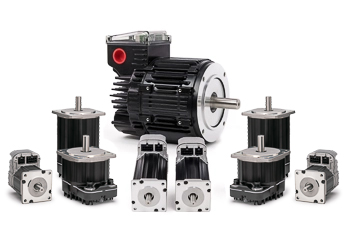
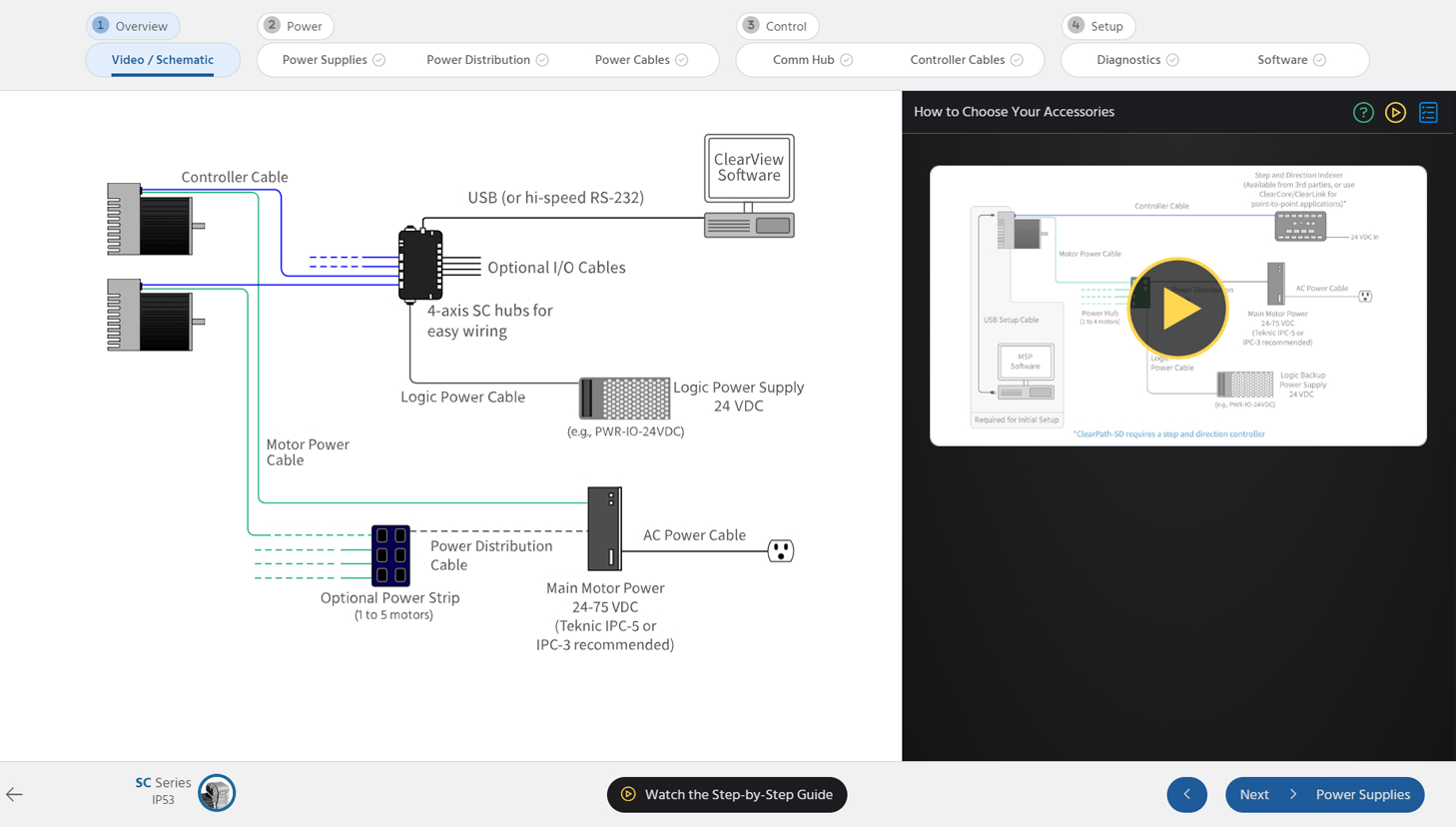
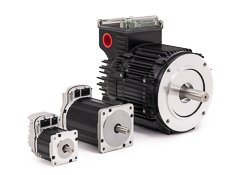
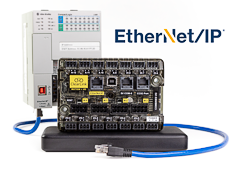
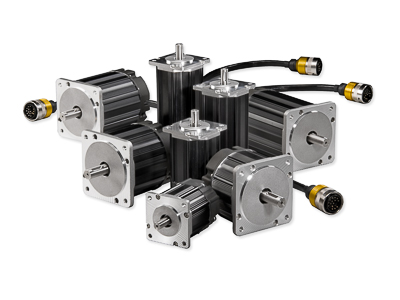
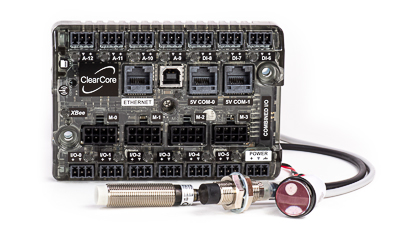
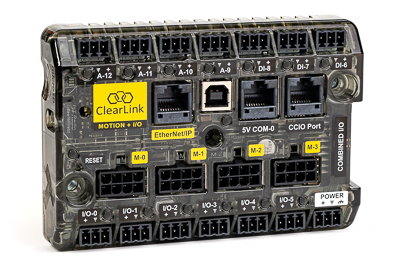
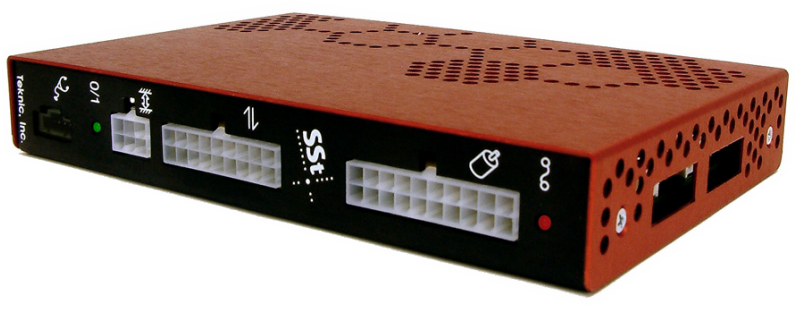
Instead, Paktech utilized Teknic’s ClearPath integrated servos—which combine the motor, encoder, and drive into a single unit—paired with Teknic’s ClearLink EtherNet/IP motion controllers. This setup allowed Patrick to maintain a streamlined cabinet while gaining the closed-loop performance of a servo.

"The biggest one for me as a controls engineer was the ability to integrate [ClearPath and ClearLink] into an existing controls architecture that was already built around Allen-Bradley."
Patrick Benoit
Patrick Benoit
Senior Controls Engineer, Paktech

Seamless Integration with Allen-Bradley

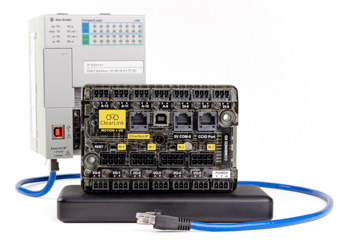
The deciding factor for the control design was the ease of integrating Teknic components into the existing Rockwell Automation/Allen-Bradley environment. By using Teknic’s EDS (Electronic Data Sheet) files, Patrick was able to map the motion control system directly into the PLC without custom coding complex communication bridges.

"The biggest one for me as a controls engineer was the ability to integrate [ClearPath and ClearLink] into an existing controls architecture that was already built around Allen-Bradley," Patrick says. “When I saw Teknic had an EDS file, meaning somebody had done the work to integrate with Allen-Bradley... I thought, ‘Oh yeah, we can buy this and I can make it work in a couple of days.’ When you don't have that, you don't know how long it's going to take to make it work.”

Driving Down Bill of Materials Costs

Beyond ease of setup, the integration offered a tangible hardware cost reduction. Traditional servo drives often require specific "Motion PLCs" to handle complex motion instructions, which carry a premium price tag. Because ClearPath handles the motion profiles internally and communicates via straightforward tags through the ClearLink, Paktech could utilize standard PLCs. "It allowed us to not use a motion PLC because of the way it talks," Patrick explains. "The difference between the two PLCs was $600."

This cost efficiency is even more pronounced when scaling axis counts on Paktech’s modular machines. When analyzing the cost for auxiliary axes—such as safety doors on their robotic cells—Patrick identified that other Allen-Bradley compatible servo systems carried a heavy premium of approximately $1,000 per axis. On a single machine configuration requiring four of these axes, the difference is substantial. "It's probably $4,000 more dollars to do it [with a competitor] than versus Teknic," Patrick notes.

"When I saw Teknic had an EDS file, meaning somebody had done the work to integrate with Allen-Bradley... I thought, ‘Oh yeah, we can buy this and I can make it work in a couple of days.’"
Patrick Benoit
Patrick Benoit
Senior Controls Engineer, Paktech

Optimizing Power and Performance

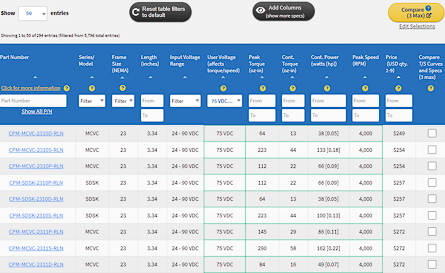
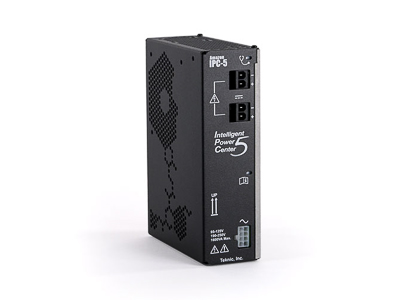
Space and power distribution were also key constraints. Patrick utilized Teknic’s online performance tools to validate that the machines could run effectively on 24V DC, eliminating the need for high-voltage power supplies in the cabinet.

"I found that very helpful to be able to see, 'Oh, I'm not going to do 75 [volts], I'm going to do 24. Here's the trade-off in terms of the torque [at speed, aka “power”], '" Patrick says. The data confirmed that for their speed requirements, the 24V configuration provided ample power without the need for larger, more expensive power distribution components.

By leveraging Teknic’s ClearPath servos and ClearLink controllers, Paktech successfully delivered high-performance packaging machinery that remains cost-effective for their end-users, proving that advanced motion control doesn't require complex, expensive infrastructure.

Key Outcomes

  • Reduced Component Cost: Eliminated the need for premium "Motion PLCs," saving approximately $600 per unit by utilizing standard PLC hardware.
  • Significant Axis Savings: Identified a potential savings of $4,000 ($1,000 per axis) compared to traditional competitors’ servo motor + drive solutions.
  • Streamlined Integration: EDS files allowed for rapid integration into the Allen-Bradley architecture.
  • Simplified Cabinet Wiring: Replaced bulky stepper drivers and high-voltage power supplies with integrated servo motors running on 24V DC.
Explore Teknic Products
Learn more about Teknic's industrial motion control products. Easily access 2D and 3D part drawings, manuals, software downloads, pricing, and specifications.
Learn More
Speak with an engineer
To speak directly with one of Teknic's experienced factory-direct engineers, fill out the brief contact form linked below and we will contact you soon.
Contact Teknic
Share / Save Cart