














Teknic homepage

Accelerating Harder than a Fighter Jet: Medical Diagnostics at 9G

No person or company received any form of compensation for their feedback on Teknic products.

QuidelOrtho is a preeminent name in the in vitro diagnostics industry, providing laboratories globally with scalable solutions to improve patient outcomes. A cornerstone of their technology portfolio is the VITROS® family of systems, including the XT 7600 Integrated System, which uses proprietary dry-slide technology to run clinical chemistry and immunoassay tests with high throughput and accuracy.

Developing the motion control architecture for these advanced analyzers presented a significant engineering contradiction: the system needed to move incredibly fast to maintain throughput, yet stop with absolute stillness to ensure optical precision.

The Challenge: Speed Without Vibration

Gary Denton, Principal Engineer at QuidelOrtho, was tasked with executing a critical motion profile: moving a filter wheel 26 degrees in just 22 milliseconds. This not only required aggressive acceleration, but any residual vibration or "settling time" would interfere with the machine’s optics.

The engineering team initially attempted to build a custom in-house servo controller to handle the load. However, the alternative solution struggled with the physical demands of the move, generating excessive heat and mechanical violence. "We tried several alternatives. None met our performance requirements and specifications," says Gary.

"I think the tangential linear acceleration at the edge of the filter wheel was something like 9+ Gs in some of those really fast moves. Which is more than an F-16."
Gary Denton
Principal Engineer, QuidelOrtho

Achieving 9Gs+ with Advanced Control Algorithms

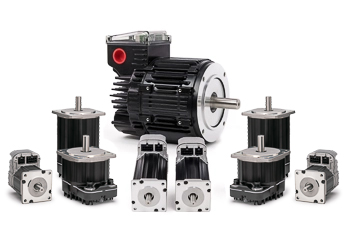
Turning to Teknic, Gary utilized servo systems equipped with Regressive AutoSpline™ (RAS), an advanced motion planning algorithm that provides "double jerk limiting.” In other words, this algorithm limits the rate of change of acceleration (jerk), and importantly, the rate of change of jerk as well (snap or jounce). This feature allowed the motor to ramp up power smoothly but aggressively to prevent the mechanical ringing that typically plagues high-speed positioning.

The result was a motion profile that exerted an immense force to accelerate the load while remaining perfectly controlled. "I think the tangential linear acceleration at the edge of the filter wheel was something like 9+ Gs in some of those really fast moves," says Gary. "Which is more than an F-16."

Crucially, the Teknic system handled the braking phase without the mechanical shock seen in other systems. "To move 26 degrees in 22 milliseconds... being able to do it without bump... where other systems would cause it to resonate," Gary explains. "That was important for the optics, not to jostle the optics at the required settling time."

"The Hard Stop Homing capability was so effective that it allowed us to eliminate home sensors and related wiring, which will further impact instrument reliability."
Gary Denton
Principal Engineer, QuidelOrtho

Streamlined Integration and Reliability

Beyond raw performance, the Teknic servo solution offered features that simplified the machine’s physical design. Gary utilized "Hard Stop Homing," a feature where the motor precisely detects a physical limit to establish position, rather than relying on external sensors.

"The Hard Stop Homing capability was so effective that it allowed us to eliminate home sensors and related wiring, which will further impact instrument reliability," says Gary.

For medical analyzers running high-volume diagnostics, long-term durability is non-negotiable. The Teknic system has proven its robustness in the field. "The product itself has met the demanding reliability requirements in our market," notes Gary. "[It has] gone through tens of millions of cycles and has been an exceptionally reliable system."

Key Outcomes

  • Extreme Acceleration: Achieved 9+ Gs of tangential linear acceleration to meet throughput targets.
  • Optical Stability: Executed 26-degree moves in 22ms with near-zero settling time or resonance, preserving optical integrity.
  • Simplified Hardware: Eliminated external home sensors and wiring by utilizing the servo’s Hard Stop Homing capability.
  • Proven Reliability: Field-tested durability with tens of millions of cycles completed.
Explore Teknic Products
Learn more about Teknic's industrial motion control products. Easily access 2D and 3D part drawings, manuals, software downloads, pricing, and specifications.
Learn More
Speak with an engineer
To speak directly with one of Teknic's experienced factory-direct engineers, fill out the brief contact form linked below and we will contact you soon.
Contact Teknic
Share / Save Cart