













Teknic homepage

Precision Assembly Stages: Upgrading from AC Induction Motors to Servos

No person or company received any form of compensation for their feedback on Teknic products.

For engineers designing high-speed automated assembly lines, the difference between a standard AC induction motor and a modern servo system often dictates the throughput of the entire machine. "The cycling performance of the servo motor is far and away better than what we can achieve with the AC motor," says Bill Nott, Application Engineer at Stelron.

Stelron specializes in designing and manufacturing precision motion systems, including the Precision Link Chassis (P-Link) and Rotary Assembly Dial (RAD) index tables. These platforms are the backbone of their customer’s automated manufacturing lines, used extensively in packaging, medical device assembly, and industrial processing. To maximize throughput in these applications, the motor driving the input shaft must provide precise control over the index and dwell cycles.

"The cycling performance of the servo motor is far and away better than what we can achieve with the AC motor."
Bill Nott
Application Engineer, Stelron

Moving Beyond AC Induction Limits

Historically, Stelron relied on commercial AC induction motors paired with variable frequency drives (VFDs) to power its chassis. While functional, this setup introduced complexity when precise cycling was required. Achieving a specific index-and-dwell motion profile often necessitated external feedback devices.

"With the AC setup, I have to worry about acquiring a sensor to simulate that it's [in] dwell and then stopping it," Bill explains.

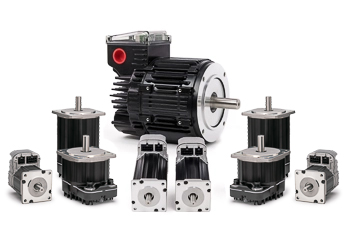
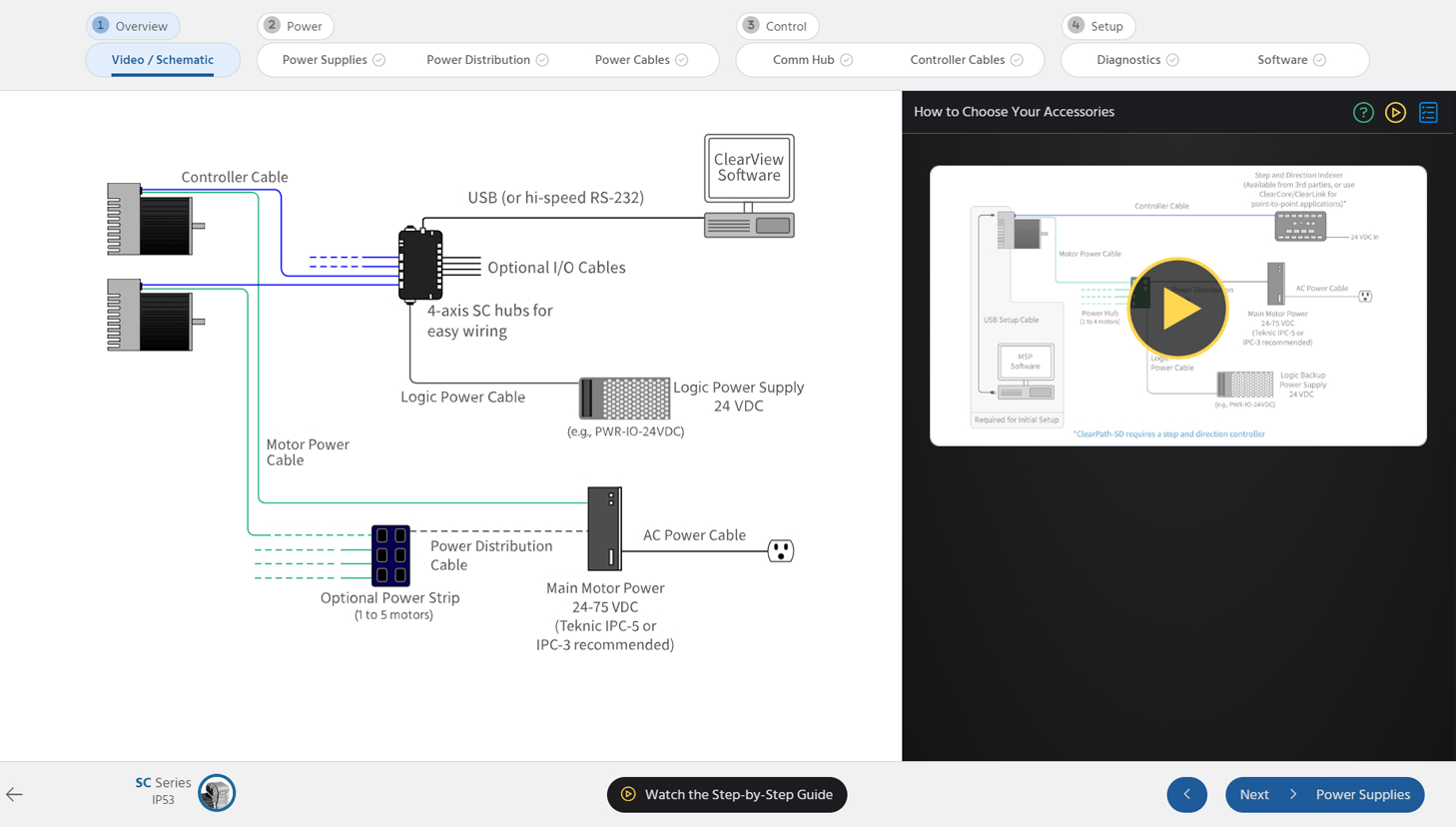
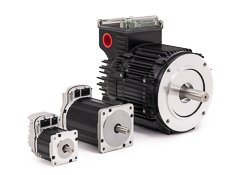
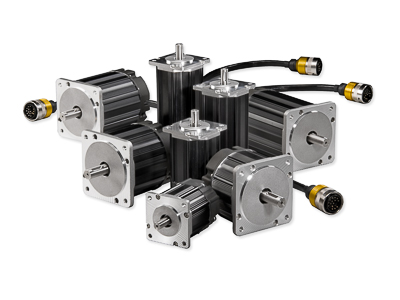
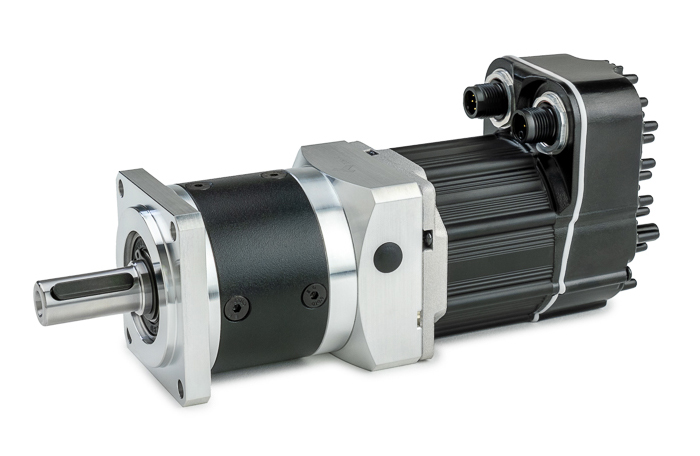
By switching to Teknic’s ClearPath integrated servos, Stelron eliminated the need for these external sensors. ClearPath combines the brushless servo motor, encoder, drive, and controller into a single compact package. Because the motion profiles are handled internally by the servo's controller, the positioning is exact and repeatable without requiring a PLC to manage external sensor triggers.

"It's directly programmed into the servo move," Bill notes. This transition has allowed Stelron to offer tighter control over its conveyor indexing. The shift in performance was significant enough that one of Stelron’s customers—a major global pharmaceutical and medical device manufacturer—"lock, stock and barrel switched out all the AC inverters in lieu of Teknic NEMA56 [servo motors]."

© Stelron

Diagnostics for Mechanical Troubleshooting

Beyond simple motion control, the switch to servo technology provided Stelron with a new window into their machine mechanics. The ClearPath MSP (Motor Setup Program) software includes a built-in digital oscilloscope and a suite of diagnostic tools that allows users to visualize performance data such as torque, velocity, and tracking error in real-time.

For Bill, this data is vital not just for tuning the motor, but for diagnosing the mechanical health of the assembly line itself. "We always scope the motor," says Bill. "We have been able to look at the gross information coming out of the scope to be able to target some downstream mechanical issues."

By analyzing the torque feedback, Stelron can identify binding or resistance in the various mechanical linkages, ensuring the system runs smoothly before it leaves the factory floor.

© Stelron

Versatility Across the Machine Line

Stelron integrates various ClearPath motor sizes depending on the specific machine requirements. They typically utilize the NEMA 56C AC-input motors for their heavy-duty Precision Link (P-Link) chassis, while deploying NEMA 23 or 34 DC-input motors for the Rotary Assembly Dial (RAD) systems.

"I love the little DC motor," Bill says, noting that the NEMA 34 ClearPath is "a great substitution for a traditional permanent magnet DC motor with an SCR [Silicon-Controlled Rectifier] drive."

Regardless of the frame size, the software interface and ease-of-use remain primary drivers for the engineering team. The ability to connect a PC and immediately test the mechanics streamlines the factory acceptance process. "The ease of being able to drive it right from the graphical screen from MSP is what sold me on using the product," Bill explains. "I just plug the laptop into it and I can run it straight from the laptop."

© Stelron
"The ease of being able to drive it right from the graphical screen from MSP is what sold me on using the product. I just plug the laptop into it and I can run it straight from the laptop."
Bill Nott
Application Engineer, Stelron

This combination of performance and usability has made Teknic the preferred standard for Stelron's designs. Bill concludes, "We try to push Teknic wherever we can and we love the products."

Key Outcomes

  • Superior Cycling: Achieved higher performance indexing compared to AC induction motors with VFDs.
  • Simplified Architecture: Eliminated external sensors previously required to simulate dwell and stop positions.
  • Mechanical Visibility: Utilized Teknic’s software diagnostic tools to identify and resolve downstream mechanical issues.
  • Flexible Integration: Successfully deployed across distinct machine lines, using NEMA 56C (AC) for P-Link chassis and NEMA 23/34 (DC) for RAD systems.
Explore Teknic Products
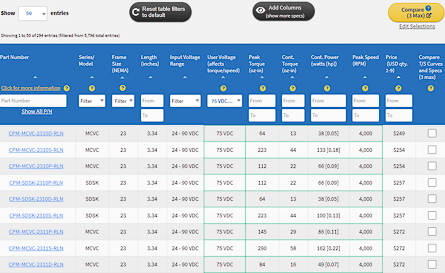
Learn more about Teknic's industrial motion control products. Easily access 2D and 3D part drawings, manuals, software downloads, pricing, and specifications.
Learn More
Speak with an engineer
To speak directly with one of Teknic's experienced factory-direct engineers, fill out the brief contact form linked below and we will contact you soon.
Contact Teknic
Share / Save Cart