Teknic homepage

Defeating Obsolescence and Modernizing Automated Bag Closing Machines

No person or company received any form of compensation for their feedback on Teknic products.

Relying on motion components that require proprietary programming languages often traps equipment manufacturers in a rigid automation architecture. For packaging machine builders, this rigidity complicates updates and forces otherwise viable machine designs into early retirement the moment a single component becomes obsolete.

Kwik Lok, the creator of the ubiquitous plastic bag closures used globally in bakery and produce aisles, recently faced this exact limitation. To keep up with customer demand and maintain competitive prices, Kwik Lok’s engineering team was tasked with modernizing several machine lines while navigating strict budget constraints.

Simplifying the 893C Architecture

The modernization effort began with the 893C Automatic Bag Closing Machine, which previously relied on a decentralized network of “smart” stepper motors from a third-party vendor. According to Andy Roy, Automation Engineer at Kwik Lok, this legacy architecture had become highly cumbersome.

"We had three different motors plus a controller to program," Andy explained. "That's four items that had to have individual programs." Because the direction, distance, and stopping points were hardcoded in a proprietary language, the system could not be easily adjusted offline, creating integration bottlenecks.

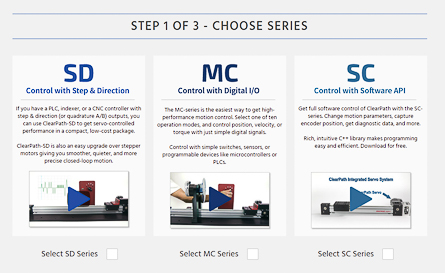
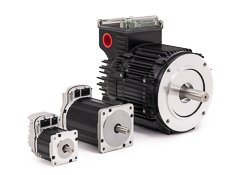
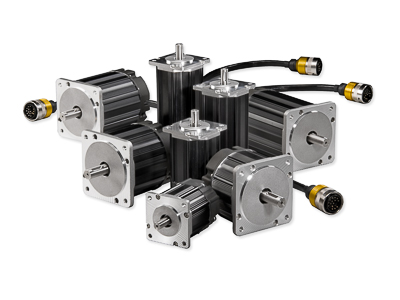
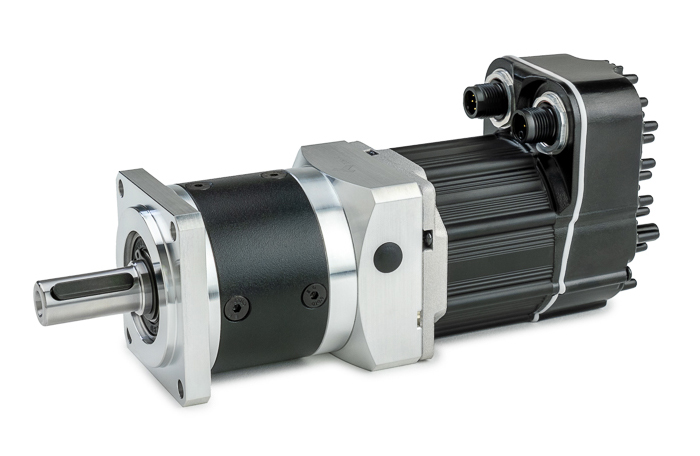
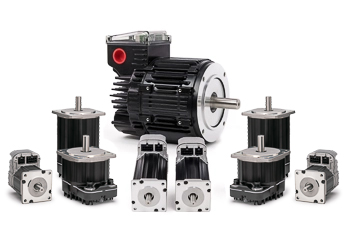
To streamline the design, Kwik Lok transitioned to a centralized PLC paired with both the MC and SD series of Teknic ClearPath integrated servo motors. The ClearPath-MC (Motion Control) series features an integrated motion controller, allowing the motor to execute pre-programmed moves using simple digital I/O signals from the PLC. Complementing this, the ClearPath-SD (Step and Direction) series serves as a drop-in replacement for traditional stepper setups. The SD is a brushless DC servo motor with a built-in drive and high-resolution encoder that accepts industry-standard, digital step-and-direction signals.

"By switching from a stepper motor to a [servo motor interface], we were able to get a solution that was better integrated," Andy noted. "Because that's all controlled in the central PLC, we can change the start and stop positions, the stroke, and the distance programmatically as needed."

"By switching from a stepper motor to a [servo motor interface], we were able to get a solution that was better integrated. Because that's all controlled in the central PLC, we can change the start and stop positions, the stroke, and the distance programmatically as needed."
Andy Roy
Automation Engineer, Kwik Lok

Resurrecting the 872 Plus Economy Line

Building on the success of the 893C, Kwik Lok applied a similar integration strategy to solve a pressing commercial challenge: reviving a popular, budget-friendly machine model that had been retired due to component obsolescence. Customer demand strongly favored bringing the machine back, but rebuilding it required a controller capable of handling machine logic, two axes of motion, and I/O—without inflating the baseline cost.

"We had a machine that had traditionally just been built with really simple hardcoded logic, and all the components were becoming obsolete," Andy noted.

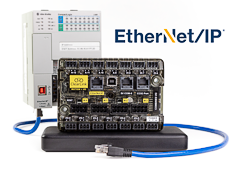
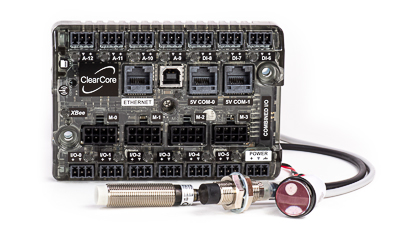
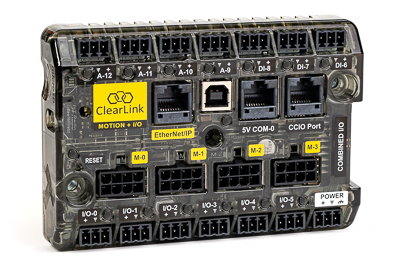
The team centered the new 872 Plus design around the Teknic ClearCore, a programmable industrial multi-axis motion and I/O controller featuring a rich C++ library. For the 872 Plus, the ClearCore handles the machine's entire workload. By utilizing the controller's onboard analog and digital inputs to manage push buttons, indicator lights, and a potentiometer, along with two axes of step and direction (ClearPath-SD) motion, engineers eliminated the need for an external programmable logic controller (PLC).

"The fact that the ClearCore and Teknic motors are very reasonably priced made it possible for us to bring that machine up to modern technology while still keeping it down at the basement economy model price structure," Andy said. "When everything you need is right there in the one controller, that's a lot of time and money saved."

"The fact that the ClearCore and Teknic motors are very reasonably priced made it possible for us to bring that machine up to modern technology while still keeping it down at the basement economy model price structure. When everything you need is right there in the one controller, that's a lot of time and money saved."
Andy Roy
Automation Engineer, Kwik Lok

Factory Floor Application Upgrade

Beyond their customer-facing machine lines, Kwik Lok also utilized integrated motion to upgrade an in-house punch press application. The system required constant velocity operation but needed to stop in a precise "open" position.

Historically, achieving this precision with an induction motor involved compounding costs and wasted panel space. A basic induction motor required a variable frequency drive (VFD), Ethernet networking capabilities, and an external encoder just to hit the open position accurately.

"You start with a cheap motor but pretty soon you end up with the same cost as a servo," Andy explained.

By upgrading to a fully integrated, integral horsepower Teknic servo, Kwik Lok achieved exact positional control during startup and shutdown. They eliminated the external encoder and additional cabinet drives, maintaining their strict budget while drastically improving machine control due to the precise velocity control, and positional accuracy.

"When we went to the Teknic motor it wasn’t costing us any more than the induction motor but we were getting much better control," Andy added.

The Value of Accessible Vendor Support

Transitioning to a new control architecture requires reliable vendor partnerships. Standardizing on flexible, all-in-one motion control allowed Kwik Lok to break free from proprietary constraints, modernize their architecture, and extend the lifecycle of their most critical equipment.

Furthermore, when the team needed to establish Modbus communication between a secondary PLC and the controller, Teknic provided functional, highly adaptable code libraries that kept development strictly on schedule.

"Teknic is always ready and willing to answer the phone and provide answers," Andy said. "It's just a really good working experience."

Key Outcomes

  • Centralized Control: Transitioned from proprietary, hardcoded motor programs to centralized PLC control, enabling programmatic adjustments of stroke and distance parameters.
  • Lifecycle Extension: Reintroduced a highly requested, retired economy machine line (872 Plus) by lowering control hardware costs with a C++ programmable motion and I/O controller.
  • Hardware Consolidation: Eliminated the need for separate PLCs on compact dual-axis machines by utilizing onboard digital and analog I/O.
  • Simplified Topology: Replaced complex AC induction motor setups (motor, VFD, network card, encoder) with single-unit integrated servos for equivalent cost and improved positioning control.
Explore Teknic Products
Learn more about Teknic's industrial motion control products. Easily access 2D and 3D part drawings, manuals, software downloads, pricing, and specifications.
Learn More
Speak with an engineer
To speak directly with one of Teknic's experienced factory-direct engineers, fill out the brief contact form linked below and we will contact you soon.
Contact Teknic
Share / Save Cart